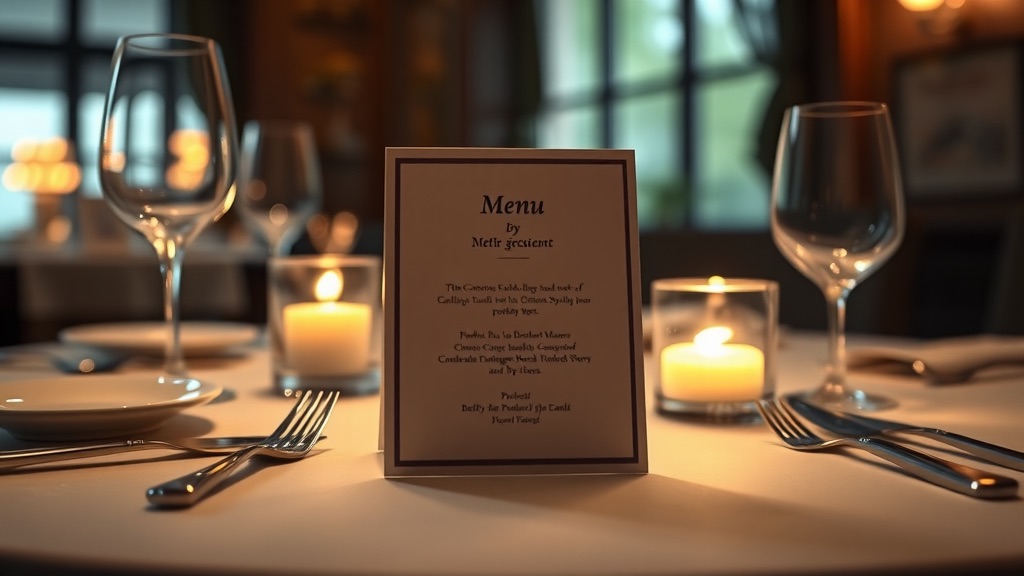
Digital Business Cards for Restaurants: A Practical Playbook


Your free BizBuzz card
Build it in minutes and share anywhere — no app needed.
Restaurants exchange thousands of contacts a year across guests, vendors, media, and events — and most of that value evaporates into pockets, junk drawers, and forgotten inbox threads. Digital business cards fix that.
The restaurant industry sits at an unusual intersection of high contact volume and poor contact management. A single mid-size property routinely handles professional relationships across five or six distinct domains: the owner cultivating investors and local press, the executive chef managing twenty supplier relationships and chasing media features, the sommelier attending trade tastings, the GM building corporate and catering accounts, and the events manager running a private dining pipeline that can represent six figures in monthly revenue. Paper business cards fail across all of these — too easy to lose, impossible to update, zero tracking, zero CRM integration.
Digital business cards solve this in ways genuinely suited to the restaurant context: contactless exchange that requires no app installation, Apple Wallet and Google Wallet loyalty passes that replace punch cards on every dimension, QR codes for table-side interactions that feed structured data back to your systems, and CRM-ready capture for events leads before they cool.
Why Restaurants Are an Underrated DBC Market
Several characteristics make digital business cards especially valuable here:
High-volume, multi-domain interactions. Hundreds of guests weekly, plus vendors, food media, event prospects, and corporate accounts — most restaurants are generating far more networking activity than they recognize or capture.
Events revenue is relationship-dependent. A missed events inquiry that goes to a competitor can represent $2,000–$10,000 in lost revenue. The most common reason inquiries don't convert is slow, disorganized follow-up. Structured capture with instant CRM routing is the fix.
Contactless is now the professional default. Since 2020, the expectation across hospitality is contactless interaction where possible. An NFC tap or QR scan reads as current, not gimmicky.
Loyalty math strongly favors retention. Research from Bloom Intelligence (2025) found that loyal guests represent approximately $1,560 in lifetime value versus just $26 for a one-time visitor — and 75% of first-time restaurant guests never return. A wallet pass loyalty program is the most practical instrument for improving that ratio at scale.
Role-by-Role Card Strategy
One card for the whole property is the wrong approach. Each role has a distinct audience and different conversion goal:
Owner / Operator: Media relationships, investor conversations, peer networking, corporate client development. Emphasize personal brand: professional headshot, short bio, press kit link, social link, calendar for press inquiries.
Executive Chef: Vendor relationships, food media, pop-up and collaboration opportunities. Include preferred ordering contact window, Instagram or portfolio link, high-res photo access for editorial requests.
General Manager: Operational contacts, staff recruiting, local business development. The all-purpose card — direct line, email, calendar, nothing extraneous.
Events Manager / Private Dining Director: The highest-ROI card in any restaurant. Should include an embedded inquiry form (party size, date range, occasion), a calendar link for site visits, and visual assets for the private dining space. Every wasted minute between inquiry and response is measurable conversion loss.
Sommelier / Bar Manager: Importer and producer relationships, beverage press, industry events. Current list highlights, tasting note assets, preferred contact method for trade samples.
NFC Cards in the Restaurant Environment
For in-person exchanges with vendors, media, corporate clients, and VIP guests, a physical NFC card is the right tool — durable, premium in feel, and requires zero app installation on the recipient side.
Chip selection:
- NXP NTAG 215 (504 bytes user memory): Standard choice for digital business cards. Easily stores any redirect URL including tracking parameters and UTM tags.
- NXP NTAG 216 (888 bytes user memory): For advanced use cases — multiple NDEF records, larger vCard payloads stored on-chip, or richer future-proofed configurations.
Materials by role:
- Metal for owners, chefs, and events managers — a substantial card signals that you take presentation seriously
- PVC for operational staff with lower exchange frequency
- Recycled or wood composite if your brand positioning includes sustainability messaging
Placement in the restaurant:
- Behind the host stand for the GM's VIP guest interactions
- In the events manager's portfolio binder, alongside venue photos
- In the chef's coat pocket for vendor encounters at markets and tastings
- A small card display near the bar for industry visitors and food media
Apple Wallet and Google Wallet: Guest Loyalty at Scale
The wallet pass is where restaurants have disproportionate leverage, and it remains consistently underused. A pass installed on a guest's phone lives alongside their boarding passes and transit cards, surfaces on the lock screen when they're near your location, and updates automatically when you change hours or run a promotion.
Apple Wallet mechanics: Third-party platforms like PassKit or Passcreator generate signed .pkpass files using an Apple Pass Type Certificate. The Wallet app supports:
- Location-triggered lock-screen notifications when the guest is within a few blocks
- Push updates via Apple Push Notification Service when hours, promotions, or loyalty points change
- A QR or barcode on the pass back for POS scanning at checkout
Google Wallet mechanics: The Google Wallet API (the current correct name — "Pay Passes" is outdated terminology) uses a Class/Object model: you define a loyalty card class, then issue individual objects per guest. A 2025 addition, Nearby Passes, surfaces loyalty cards when users approach a registered point of interest — a quiet nudge that often converts to a walk-in.
What a restaurant loyalty pass should include:
- Name and logo
- Address with one-tap navigation
- Hours (live-updating via push)
- Reservation link
- Current promotion or tier status
- Scannable QR on the back for POS redemption
Timing the ask: The highest-converting moment is the end of a positive experience — post-meal checkout, or paired with a dessert presentation. "Add us to your Apple Wallet and we'll flag your preferences for next time" converts better than a generic loyalty pitch mid-meal.
QR Codes for Table-Side Interactions
QR codes are now standard infrastructure in restaurants. Extend the pattern with intent:
| QR Type | Purpose | Best Placement |
|---|---|---|
| Loyalty pass install | Get guests into wallet loyalty | Table tent, receipt |
| Events inquiry | Private dining lead capture | Bar area, menus website |
| Feedback form | Post-meal sentiment + contact | Bill presenter |
| Manager card | Guest escalation path | Host stand |
| Seasonal menu | Live menu link, no reprints | Every table |
Each QR should carry distinct UTM parameters so you can track which placements drive action and adjust accordingly.
Events and Private Dining: The Highest-ROI Pipeline
A structured events flow built on digital card infrastructure:
- Prospect encounters the events QR at the restaurant or on the website
- Opens the events manager's digital card
- Taps "Send Event Inquiry" — short embedded form: name, email, party size, date range
- CRM contact is created with
source = events_inquiry, timestamped - Events manager receives an instant notification with the structured data
- Templated proposal email goes out within 60 minutes
- Calendar link for a site visit is included in the email
This is faster and more professional than a web form that routes to a generic info@ inbox. Conversion from fast, structured follow-up versus "we'll get back to you" is consistently higher — and your pipeline is visible rather than scattered across email threads.
Network Intelligence for Culinary Professionals
For the chef attending trade tastings in multiple cities, the sommelier building an importer network, or the owner who meets a food journalist at every festival — the sheer volume of contacts can become unmanageable. An enterprise CRM is overkill; a spreadsheet is inadequate.
BizBuzz Cards takes a different angle here. It's a mobile-first digital card with a built-in contact-save CRM and what may be the category's most genuinely useful AI feature: semantic search across your saved network. You can query in plain English — "natural wine importers I met in New York" or "food writers who cover sustainable seafood" — and get relevant matches rather than scrolling a flat alphabetical list. For culinary professionals who collect connections the way they collect producers, that's practically useful rather than a marketing claim. The free tier covers one card; paid tiers unlock unlimited cards, publishable mini-sites, and unrestricted AI search. And if you want the NFC tap experience, BizBuzz card links work on any cheap blank NFC tag you write yourself — the physical handoff ritual stays intact without buying proprietary hardware.
Multi-Location Restaurant Groups
For groups running multiple properties, card architecture needs to account for:
- One brand template applied across all locations
- Location-specific variants for each GM and events manager
- Wallet passes that can be property-specific or brand-wide
- CRM segmented by location and role type
This requires a platform with multi-team management and location-aware templates — typically a feature of mid-market or enterprise digital card platforms.
Common Mistakes
- One generic card for the whole team. Owner, chef, and events manager have completely different audiences and conversion goals.
- No wallet pass loyalty program. The highest-leverage guest retention tool in any restaurant, consistently overlooked.
- Events inquiries going to a shared inbox. Structured capture with fast follow-up is what converts events leads.
- Static cards. Seasonal hours, new menus, and promotional changes should push automatically to wallet passes.
- No QR attribution. You can't learn what's working if every QR points to the same destination URL.
- Ignoring vendor relationships. Structured vendor contact data pays off every renewal and ordering cycle.
Quick Comparison: Paper vs Digital for Restaurants
| Use Case | Paper Card | Digital Card |
|---|---|---|
| GM shares contact with VIP | Guest probably loses it | Wallet pass persists on their phone |
| Events inquiry | Manual follow-up from inbox | Automated CRM flow with instant notification |
| Guest loyalty | Punch card (easily lost) | Wallet pass + POS integration |
| Menu or hours update | Can't change what's printed | Live push update to all passes |
| Press kit | Email attachment per request | One-tap download link |
| Vendor relationships | Card pile in a drawer | Searchable CRM |
| Multi-location | Reprint per location | Variants from one platform |
Conclusion
Restaurants have more to gain from digital business cards than most industries — not because the technology is flashy, but because the operational gaps are so visible. Events inquiries that never get structured follow-up. Guest relationships that don't survive the first visit. Vendor networks living in someone's memory. Press interactions that can't surface the right materials quickly enough.
The right setup: NFC cards (NXP NTAG 215 or 216) for owner, chef, and events manager; a wallet pass loyalty program on Apple Wallet and Google Wallet with live-push updates; intent-specific QR codes at table with attribution tagging; and at minimum a lightweight CRM for events and corporate accounts. Each role gets a card built for its actual audience — and the guest relationship has a real chance of continuing past the check.
Sources
- Bloom Intelligence, State of Restaurant Guest Retention 2025: https://bloomintelligence.com/blog/state-of-restaurant-guest-retention-2025/
- Restroworks, Restaurant Loyalty Program Statistics: https://www.restroworks.com/blog/restaurant-loyalty-program-statistics/
- Chowbus, Restaurant Loyalty Program Trends 2025: https://www.chowbus.com/blog/restaurant-loyalty-program-trends
- Google Wallet API documentation: https://developers.google.com/wallet
- Google Wallet IO 2025 updates: https://developers.googleblog.com/explore-the-latest-updates-google-wallet-io-25/
- Apple PassKit documentation: https://developer.apple.com/documentation/passkit
- PassKit platform (restaurant/loyalty passes): https://passkit.com/
- NXP NTAG213/215/216 product page: https://www.nxp.com/products/NTAG213_215_216
Make one of your own
Build a digital business card in a few minutes and share it anywhere — no app required on the other end.
Create free card →Keep reading
Digital Business Cards for Job Seekers: Stand Out in a Crowded Market

White Label Digital Business Cards: A Buyer's and Builder's Guide
Digital Business Cards for Small Business: A Practical Playbook