Digital Business Card Trends 2026: Where the Category Is Heading


Your free BizBuzz card
Build it in minutes and share anywhere — no app needed.
The digital business card category has matured. What began as a scattered mix of QR generators, NFC card retailers, and Apple Wallet pass services has consolidated into a recognizable software category with genuine enterprise adoption. Here's what's actually shaping it in 2026 — and what's worth paying attention to versus what's hype.
The year-on-year improvement in digital business card platforms has been real. Feature parity across the category's top players is now largely achieved on the basics: QR codes, NFC card support, wallet passes, basic CRM integrations, team management. The competition in 2026 is happening above that waterline — on integration depth, AI features that actually work, compliance infrastructure, and platform sustainability in a consolidating market.
For professionals evaluating platforms and teams deciding where to invest, the direction of the category matters as much as the current feature list.
Market Context
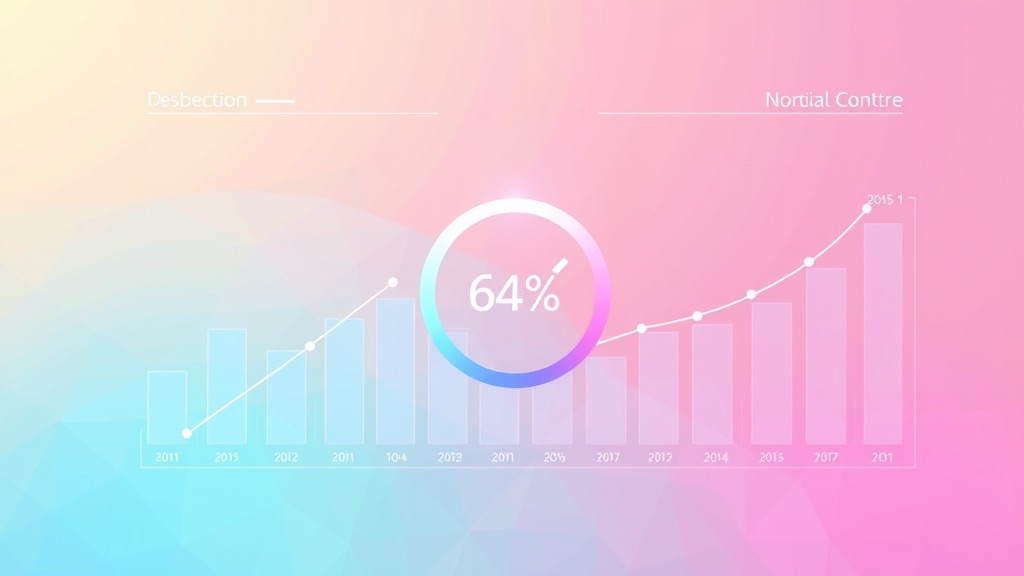
Independent market research firms consistently put the digital business card market in the $200–240 million range for 2025–2026, with compound annual growth rates clustering around 9–12% (Mordor Intelligence estimates approximately $217M in 2026 at 8.86% CAGR; Research Nester puts 2026 at approximately $238M at 12.2% CAGR). Note: a few research vendors have published market size figures that are arithmetically implausible — the figures cited above are from sources whose numbers are mutually consistent with other verified data.
The most significant adoption shift happened between 2020 and 2024, when contactless interaction went from a preference to a professional default. By 2024, survey data from digital card platforms suggests roughly 37% of businesses had adopted digital cards in some form — directionally accurate, though the figure comes from industry participants, not independent census data.
Trend 1: Wallet Passes Are Now the Canonical Distribution Format
The shift from "QR code that opens a webpage" to "QR code or NFC tap that installs a wallet pass" is complete at the category level. Every serious platform in 2026 produces both Apple Wallet .pkpass files and Google Wallet passes automatically from a single profile. Platforms without dual-wallet output are no longer competitive.
More significant than feature parity: the webpage that the QR or NFC tap opens is now treated primarily as a wallet pass install funnel, not as the destination itself. Landing pages are being redesigned around wallet install rate as the primary conversion metric. The contact save and the share-back form are secondary steps.
The underlying reason matters: Apple Wallet passes persist through app uninstalls, phone upgrades, and carrier changes in ways that web bookmarks and saved contacts don't. The Google Wallet API similarly provides a persistent pass that self-updates when the cardholder changes their information. From the recipient's perspective, a contact in their wallet is permanent and self-maintaining.
Implication for buyers: Any platform you evaluate in 2026 must produce high-quality Apple Wallet and Google Wallet passes with multi-location geofencing, dynamic back-of-pass content, and remote update support via Apple Push Notification Service and the Google Wallet Update endpoint. These are table stakes.
Trend 2: CRM Integration Depth Is the Real Differentiator
Three years ago, the category-defining question was "do you have an NFC card?" Two years ago it was "do you support Apple Wallet and Google Wallet?" In 2026 it's "how rich and reliable is your CRM integration?"
The depth dimensions that separate leading platforms:
Native integrations vs. Zapier connectors. Native integrations with HubSpot, Salesforce, Pipedrive, and Microsoft Dynamics are becoming table stakes. Webhook-and-Zapier integrations are increasingly viewed as workarounds for platforms that haven't invested in direct API relationships.
Structured event data. Every card exchange should fire a CRM event with source context (show name, location, sub-source, referring user ID), the recipient's information, and any custom fields. The richer the event data, the more powerful the downstream automation.
Automated lead routing. Contacts should route to the right rep, pipeline, and nurture sequence automatically based on source context. Manual triage doesn't scale and introduces delays that kill conversion.
Bidirectional sync. CRM updates — contact lifecycle changes, deal closures — should flow back to the card platform for analytics and re-engagement triggers. One-way fire-and-forget integrations are insufficient for mature sales operations.
Trend 3: AI Features That Are Actually Useful (vs. AI Features That Are Hype)
AI personalization is the most-discussed trend in the category for 2026. The marketing overstates the current reality; the real implementations deserve attention on their own merits.
What exists and works:
AI-generated landing page variants. Some platforms generate audience-specific landing page variants based on share context — a card tapped at a healthcare conference surfaces a healthcare-relevant version. Early-stage but genuinely useful for multi-vertical sales teams.
AI-driven follow-up drafting. CRM-connected platforms draft personalized follow-up emails from the captured contact record and source context. The cardholder reviews and sends rather than writing from scratch.
AI-powered analytics recommendations. "Your wallet install rate dropped 15% this month — consider updating your CTA" or "your highest-converting events this quarter were X, Y, and Z." Actionable signals surfaced without requiring dashboard navigation.
AI semantic search across your saved network. This is where it gets genuinely interesting. BizBuzz Cards has taken a different approach from the enterprise-CRM integration path: rather than firing contacts into Salesforce, it builds you a searchable personal network map. The AI semantic search lets you query your saved contacts in plain English — "startup founders in climate tech I met at Austin events" or "procurement leads interested in our enterprise tier" — and surface relevant matches from your actual saved network, not a keyword-match against names. For professionals whose network grows faster than their ability to use it, that's practically useful in a way that "AI-generated personalization" often isn't. Free tier covers one card; paid tiers unlock unlimited cards, mini-sites, and unrestricted AI search.
What's hype:
- AR business cards (the tech exists; the use case adds friction rather than removing it)
- Voice-activated card sharing (niche, low adoption)
- Blockchain-verified business card identity (adds complexity without clear value for most professional contexts)
- Web3 / NFT business cards (a 2022 trend that has faded to near-zero adoption)
Trend 4: Sustainability Moves from Positioning to Procurement Criterion
The environmental case for digital cards over paper has always been real. Approximately 10 billion business cards are printed annually in the US alone (per printing industry estimates), and roughly 88% are discarded within a week of being received (Adobe, 2016). The lifecycle carbon footprint of printed marketing collateral is increasingly tracked in enterprise Scope 3 emissions reporting.
In 2026, this is beginning to move from marketing positioning to actual decision criteria:
- Enterprise procurement teams are starting to require carbon footprint documentation for marketing materials in RFPs
- Platforms that can provide verifiable carbon savings per user are being preferred in competitive evaluations
- Sustainable NFC card hardware (recycled PVC, bamboo, FSC-certified wood) is standard rather than a premium add-on
- Some platforms are introducing hardware take-back programs for old NFC cards
Sustainability is still a tiebreaker rather than a primary driver for most buyers — but the enterprise compliance requirements driving it are only intensifying, and the direction is clear.
Trend 5: Multi-Profile Architecture Becomes Standard
The single-card-per-person model is giving way to multi-profile architecture. Sales reps covering multiple verticals, consultants with multiple specialties, founders who pitch investors differently from how they pitch customers — all now expect to maintain multiple card variants from a single platform profile.
A single underlying profile drives different landing pages based on the share context. The QR on a healthcare-industry brochure opens the healthcare variant; the NFC card used at a fintech meetup opens the fintech-relevant version. Each variant tracks separately in the CRM, routing leads to the appropriate pipeline.
Audience-specific messaging consistently outperforms one-size-fits-all messaging on conversion metrics. Platforms that support native multi-profile architecture natively are pulling ahead of those that force a single-profile model.
Trend 6: Compliance Infrastructure Moves Up the Priority Stack
GDPR, CCPA, and jurisdiction-specific equivalents are being joined by industry-specific requirements — HIPAA for healthcare, FINRA for financial services, FERPA for education. Digital business card platforms serving regulated industries are investing in compliance-aware infrastructure:
- Consent capture at share-back forms: Recipients explicitly opt in to communication types, not just a catch-all consent
- Data residency controls: EU-only or US-only data residency options for enterprise buyers
- Audit logs: Who accessed which contact record, when, and with what changes
- Right-to-be-forgotten workflows: Deletion requests handled across the platform and all integrated CRMs
- HIPAA-specific modes: Configurations for medical practitioners dealing with PHI constraints
These features are unsexy but increasingly necessary for any platform that wants to serve regulated industries at enterprise scale.
Trend 7: NFC Hardware Becomes a Delivery Mechanism, Not the Product
Counterintuitively, the NFC card's centrality to the category is decreasing. The underlying software platform and the wallet pass it produces are the product; the NFC card is one access point among several.
Alternative access points growing in importance:
- QR codes in email signatures, Zoom backgrounds, social bios, packaging
- NFC stickers on phones or laptops, turning the device itself into a tap surface
- Direct wallet pass install links in any digital communication
- NameDrop-style proximity sharing between iOS devices (Apple's evolution of the near-field sharing concept)
The NFC card still has a clear role in face-to-face exchanges where the physical handoff matters. But it no longer drives purchase decisions. Platforms that built their positioning primarily on hardware quality are competing more on software depth. The buyer's question has shifted from "how good is the card?" to "how good is the platform?"
Trend 8: Consolidation Around Established Platforms
The digital business card category had dozens of small players over the past five years. In 2026, consolidation is accelerating. The leading platforms — HiHello, Mobilo, Popl, Uniqode, V1CE — are pulling away from the long tail through investment in integration depth, compliance infrastructure, and AI features. Acquisitions and roll-ups are increasing.
One instructive example: Linq was previously a digital business card and lead capture platform. In 2025, Linq pivoted to AI messaging infrastructure — enabling AI assistants to live inside messaging apps. In February 2026, they raised a $20M Series A (TechCrunch confirmed) to fund that pivot. Their original NFC card and digital profile platform is effectively discontinued. This is a useful data point for buyers: smaller, under-capitalized platforms in this category carry real discontinuity risk.
For buyers in 2026: Default to established platforms with clear enterprise roadmaps, verifiable compliance certifications, and track records of maintaining integrations through platform changes.
2026 Buying Recommendations
- Require strong Apple Wallet and Google Wallet support — geofencing, dynamic content, remote updates — as a baseline requirement
- Evaluate CRM integration depth as a primary criterion — native integration with your CRM beats Zapier workarounds
- Test AI features for actual utility — demonstrated value in your workflow, not marketing claims
- Prefer multi-profile architecture even if you don't need it today
- Default to established platforms — consolidation risk in the long tail is real
- Evaluate team features even as an individual — the category roadmap is oriented toward team needs, and individual buyers benefit from being on platforms investing there
Conclusion
The digital business card category in 2026 is mature, consolidating, and increasingly serious. The platforms that win are those handling the full workflow — wallet passes, NFC, CRM integration, compliance, AI-augmented features, and team-level deployment — with genuine depth, not checkbox coverage. The platforms that lose are those still positioned as "a modern alternative to paper" without the integration depth that makes the category actually valuable in a professional workflow.
The buying decision in 2026 is about platform health and integration depth, not about card materials or QR aesthetics. Pick platforms that will still be around and still be investing in 2029.
Sources
- Mordor Intelligence, Digital Business Card Market report: https://www.mordorintelligence.com/industry-reports/digital-business-card-market
- Research Nester, Digital Business Card Market report: https://www.researchnester.com/reports/digital-business-card-market/6782
- TechCrunch, Linq raises $20M (February 2026): https://techcrunch.com/2026/02/02/linq-raises-20m-to-enable-ai-assistants-to-live-within-messaging-apps/
- Adobe, 4 Business Card Statistics That Will Make You Rethink Your Strategy (2016): https://blog.adobe.com/en/publish/2016/10/26/4-business-card-statistics-that-will-make-you-rethink-your-strategy
- Wave Connect, Digital Business Card Statistics: https://wavecnct.com/blogs/digital-business-card-statistics
- Google Wallet API documentation: https://developers.google.com/wallet
- Apple PassKit documentation: https://developer.apple.com/documentation/passkit
- HiHello pricing page: https://www.hihello.com/pricing
Make one of your own
Build a digital business card in a few minutes and share it anywhere — no app required on the other end.
Create free card →Keep reading
Digital Business Card Landing Page Optimization: The Page That Converts
Digital Business Card Lead Capture: How to Convert Taps into Pipeline

Digital Business Card Trends: What the Next Decade Looks Like